Finding and Nurturing Friendships After 50: A New Chapter in Connection
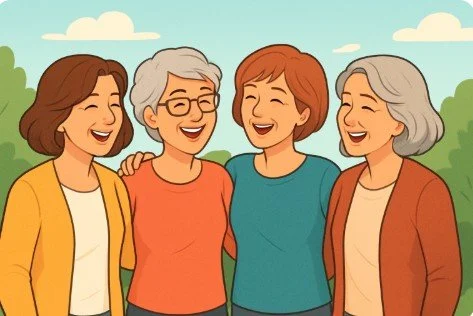
a group of older women chatting and laughing
When I was young, friendships were somewhat easy. There always seemed to be friends to hang around with, people to call on a whim, groups to join spontaneously. Looking back now, I'm not entirely sure if I really nurtured those relationships for the long haul, or if I simply enjoyed the moment. Yet somehow, some of those early connections endured. I still consider some of them friends, even though we don't hang out all the time anymore. Life has a way of reshaping our social landscapes, doesn't it?
The Evolution of Friendships Through Life's Seasons
Eventually, life happens, and friendships change in ways we never quite anticipate. We marry and suddenly find ourselves part of a couple, surrounded by other couples. We have kids, and suddenly our social circles revolve around playdates, school activities, and soccer games. Our friendships become intertwined with our children's lives—parents we chat with at drop-off, families go to competitions with, people we see at every school event.
Now that I'm in my 50s, living a couple of hours from where I spent most of my career, I've discovered that finding friends seems to be more difficult in some ways and yet easier in others. It's a paradox that catches many of us off guard during this life transition.
The Challenge of Geographic Distance and Life Changes
Living in a newer neighborhood has helped some. I've made a few friends with neighbors, though these friendships sometimes feel like they exist in a different category—friendly waves over the fence, occasional get-togethers, but perhaps not yet the deeper connections I crave. The friends I've had for a number of years now live much further away. Some have moved in opposite directions after retirement.
These long-standing friendships face a real risk. If we don't actively nurture and keep in touch, they may fade over time. The distance makes it easy to let weeks, then months, slip by without real connection. Yet these are often the people who know us best, who remember who we were before life's various transformations.
Why Friendships Matter More Than Ever After 50
Before diving into strategies for maintaining and building friendships, it's worth understanding why this matters so profoundly. Research consistently shows that social connections are fundamental to healthy aging. Strong friendships can reduce the risk of early death, while social isolation carries health risks comparable to smoking cigarettes daily.
The health benefits of friendship are remarkable and far-reaching:
Mental Health Benefits: Friendships provide a crucial buffer against depression and anxiety. People with robust social networks experience significantly lower rates of depressive symptoms and have better cognitive function as they age. In fact, strong social connections can reduce the rate of cognitive decline and dementia by up to 70 percent.
Physical Health Advantages: The benefits extend well beyond mental well-being. People with strong social ties have lower blood pressure, reduced inflammation, and a lower risk of cardiovascular disease. Those who maintain active social lives are less likely to develop heart disease and less likely to experience a stroke. Social connection even strengthens the immune system, helping people fight off illnesses and recover more quickly when they do get sick.
Longevity: Perhaps most striking, maintaining meaningful relationships may actually slow the aging process at a cellular level. Research examining DNA-level changes suggests that older adults with the most supportive relationships were aging one to two years slower than those who lacked such connections.
Strategies That Work: Intentional Connection
One friend and I have found a solution that works beautifully for us. We have a subscription to plays that brings us into the city for lunch to catch up, followed by watching a performance together. Just half a dozen days spread throughout the year ensures we maintain that vital connection. It's structured enough that we commit to it, yet flexible enough to feel natural rather than forced.
Work acquaintances from my career have been planning get-togethers, and we've managed to meet up once. It's nice to keep that connection alive, even if it requires more effort now than it did when we saw each other daily in the office. Working in a new job presents its own challenges—most of the people are at a different stage of life, making it harder to find common ground for friendship outside of work.
Practical Ways to Maintain Existing Friendships
Maintaining friendships after 50 requires intentionality. Here are evidence-based strategies that make a real difference:
Schedule Regular Contact: Rather than waiting for the perfect moment, put friendship maintenance on your calendar. Set aside specific time each week for one-on-one phone calls, video chats, or in-person meetups. Treat these appointments with the same importance you'd give any other commitment. Neighbours that we developed a closer connection with just before retirement now live half an hour from us. We don’t see each other often but we make dinner dates a few times a year to keep in touch.
Leverage Technology Thoughtfully: Email, text messages, video calls, and social media platforms can help bridge geographic distances. Even brief messages—sharing a photo, sending an article, asking about their day—maintain the thread of connection between deeper conversations. My kids and friends like to send funny memes back and forth. We keep that connections while having a little fun.
Create Traditions and Rituals: Like the play subscription mentioned earlier, establishing regular traditions gives friendships structure and something to anticipate. This could be monthly dinners, annual trips, weekly walks, or seasonal gatherings. The consistency matters more than the activity itself.
Stay Interested in Their Lives: Keep notes about important events in your friends' lives—birthdays, anniversaries, health concerns, grandchildren's milestones. Ask follow-up questions about things they've shared. This demonstrates that you're truly engaged in their journey. One of my friends recently became a grandmother. I have made it a point to ask about the baby and her kids.
Be the Initiator: Don't wait for others to reach out first. Take the lead in planning get-togethers, making phone calls, and extending invitations. Many people appreciate this initiative but struggle to take the first step themselves.
Making New Friends After Retirement
If maintaining old friendships requires effort, making new ones after 50 can feel even more daunting. Yet it's absolutely possible, and retirement actually provides a significant advantage: time. Here's how to make it work:
Join Groups Aligned With Your Interests: Whether it's art classes, book clubs, hiking groups, or volunteer organizations, participating in activities you genuinely enjoy naturally connects you with like-minded people. Shared interests provide an immediate foundation for conversation and connection.
Become a Regular Somewhere: Frequent the same coffee shop, library, fitness class, or park. Seeing familiar faces repeatedly makes it easier to move from nodding acknowledgment to actual conversation. Consistency breeds connection.
Embrace Learning Opportunities: Take classes in subjects that interest you—whether it's pottery, ballroom dancing, photography, or foreign languages. Learning environments create natural opportunities for interaction and shared experiences.
Consider Volunteer Work: Volunteering connects you with people who share your values and gives you meaningful work to discuss. It also provides regular interaction and a sense of purpose.
Explore Senior Centers and Community Programs: Many communities offer programs specifically designed for older adults, from exercise classes to cultural outings. These venues understand the challenges of making friends later in life and often structure activities to facilitate connection.
Give Relationships Time to Develop: Friendship requires repeated interaction. You can't attend one event and expect to find your best friend. Commit to showing up regularly to the same activities, giving relationships time to deepen naturally.
Reconnect With Old Friends: Social media and the internet make it easier than ever to find people you've lost touch with over the years. Old friends share history with you, providing an excellent foundation for renewed connection. Don't assume they're too busy to reconnect—they may be hoping you'll reach out.
"Promote" Work Relationships: Former colleagues can become genuine friends once professional boundaries dissolve. After retirement, those workplace acquaintances you enjoyed can transition into real friendships based on shared interests beyond work.
Overcoming Common Obstacles
Several challenges commonly arise when building friendships after 50:
Different Life Stages: If you're working in a new job where colleagues are younger, they may be juggling young children, building careers, or navigating life stages you've moved beyond. Look for connection points that transcend age—shared professional interests, hobbies, or values.
Physical Limitations: Health challenges can make socializing harder. Look for activities that accommodate your physical abilities, whether that's chair yoga, online communities, or venues with good accessibility.
Shyness or Introversion: If you're naturally reserved, making new friends feels especially challenging. Remember that introverts often build deeper, more lasting friendships because they invest more fully in fewer relationships. Start small—aim for one or two quality connections rather than a large social circle.
Loss and Grief: The death of a spouse or close friend can make socializing painful, especially when navigating social situations alone after years as part of a couple. Grief support groups can provide understanding companions who share your experience.
Feeling Awkward: It's natural to feel uncomfortable initiating conversations or inviting someone to coffee. Remember that many people feel this same hesitation and will welcome your friendliness. Asking questions about others—their interests, experiences, opinions—helps break the ice.
The Role of Living Situation
Where you live significantly impacts friendship opportunities. Active adult communities and senior living residences are specifically designed to facilitate social connection, offering built-in activities, communal spaces, and neighbors at similar life stages. However, you don't need to live in such a community to build friendships. Focus on creating opportunities within your current environment.
If you're in a newer neighborhood like mine, be patient. Neighborhood friendships often develop slowly, beginning with casual encounters and gradually deepening over time. Host a gathering, attend neighborhood events, or simply make a habit of being visible—taking walks, working in your yard, sitting on your porch.
Moving Forward: An Investment in Well-Being
Making and maintaining friendships after 50 isn't just about avoiding loneliness—though that alone would be worthwhile. It's an investment in your physical health, mental sharpness, emotional resilience, and longevity. Every conversation, every shared laugh, every listening ear contributes to your overall well-being.
Yes, it takes effort. Yes, it might feel awkward at first. Yes, you'll sometimes feel vulnerable or uncertain. But the alternative—isolation and its profound health consequences—makes the effort worthwhile.
As I navigate my own 50s, I'm learning that friendship in this season of life looks different than it did in my youth. It's more intentional, more precious, and often harder won. But it's also deeper, more authentic, and more consciously chosen. The friends I maintain and make now are people I actively choose to keep in my life, not just those who happen to be conveniently nearby.
The half-dozen days per year I spend with my friend at plays, the occasional get-togethers with former colleagues, the slowly developing connections with neighbors—each represents a thread in the social fabric that will support and sustain me through the years ahead. And that's worth every bit of effort it takes.
Canadian Resources for Further Information
Canadian Coalition for Seniors' Mental Health (CCSMH): https://ccsmh.ca/areas-of-focus/social-isolation-and-loneliness - Developed the world's first clinical guidelines on social isolation and loneliness in older adults. Provides brochures, resources, and information for older adults and caregivers.
Government of Canada - Social Isolation Toolkit: https://www.canada.ca/en/employment-social-development/corporate/seniors/forum/social-isolation-toolkit-vol1.html - Comprehensive information on understanding and addressing social isolation among Canadian seniors.
Statistics Canada - Loneliness Among Seniors: https://www.statcan.gc.ca/o1/en/plus/4881-look-loneliness-among-seniors - Data and research on loneliness patterns among Canadian seniors.
CanAge: https://www.canage.ca - National seniors' advocacy organization working to combat loneliness and improve lives of older Canadians. Offers the #LessLonely initiative.
Meetup.com: Search for local groups based on interests, with many specifically for people over 50.
American Resources for Further Information
The National Institute on Aging: https://www.nia.nih.gov/health/social-connections-and-relationships - Provides research-based information on maintaining social connections as you age.
AARP Foundation's Connect2Affect: https://connect2affect.org - Offers resources and tools to help combat social isolation.
The Silver Line (UK-based helpline): Provides friendship and support to older adults experiencing loneliness.
Meetup.com: Search for local groups based on interests, with many specifically for people over 50.
American Psychological Association: https://www.apa.org - Offers articles and research on the psychology of friendship and aging.
The journey of friendship after 50 is one of intentionality, vulnerability, and ultimately, profound reward. Whether nurturing decades-old connections or cultivating brand-new ones, each friendship we maintain or create is an act of self-care and an investment in a healthier, happier future.