
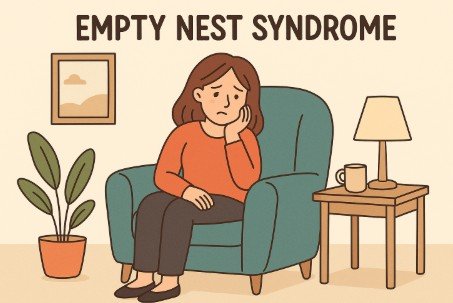
Empty Nest Syndrome
Empty Nest Syndrome: When the House Gets Quiet (Too Quiet)
No one really prepares you for the moment when the house goes from loud, chaotic, and full of life… to eerily quiet. One minute you’re stepping over shoes, reminding someone (again) to unload the dishwasher, and negotiating curfews. The next? You’re standing in the kitchen wondering why it’s so clean — and why that feels strangely unsettling.
Empty nest syndrome isn’t just missing your kids; it’s adjusting to a new version of yourself. Your role shifts overnight, and suddenly you’re left asking, “So… now what?” You’re proud, sad, relieved, nostalgic, and lonely — sometimes all before lunch. And yes, it’s completely normal to feel all of it at once.
The good news? This quieter chapter isn’t the end of your story — it’s a plot twist. One that gives you space to reconnect, rediscover, and maybe even enjoy not sharing the bathroom. Eventually, the silence gets less heavy… and starts to feel like possibility.
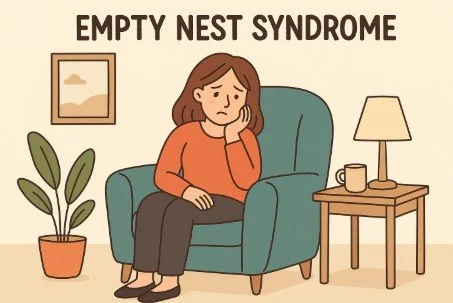
So Your Kids Left Home. Now What?
A brutally honest guide to Empty Nest Syndrome (spoiler: you’ll survive… probably with snacks and sarcasm)
Okay friend, listen. Nobody warned us about this part. Everyone preps you for sleepless newborn nights, the terrible twos, and the full-blown psychological thriller that is puberty. But Empty Nest Syndrome? Nope. That little plot twist just sneaks up like a cat knocking something off the counter while making eye contact.
One minute you’re whining about Mount Laundry and a grocery bill that rivals the GDP of a small nation. The next? Silence. Glorious. Unsettling. “Why is it so quiet and why do I suddenly feel weird about it?” silence.
Honestly, for a long time it didn’t even feel like my kids had moved out. It was more like a very long, very confusing game of musical chairs.
My stepdaughter had been living with her partner, so technically she was gone… until life happened. The relationship ended, the job disappeared, and boom—she was back home. Surprise!
My oldest stayed home for her first year of university thanks to lovely little COVID, then went away to school for four years.
My youngest went away for school too, quit her program, worked her summer job, and stayed with her boyfriend’s parents. Then she went back to school and moved into a student apartment.
So really… had anyone actually moved out? Or were they just aggressively rotating locations?
Then my daughter finished school and moved in with her boyfriend. And that—that was the moment. The “oh crap” moment. The realization that this wasn’t temporary. My kids weren’t just visiting adulthood; they were unpacking there.
That’s when it hit me: my kids are growing up. They’re building lives, making choices, and moving forward. And while I’m incredibly proud… I’m also standing in a quiet house wondering who drank all the milk when nobody’s even home.
So yes, the nest is emptier. But here’s the thing no one tells you: you’re still here. You survived diapers, drama, and Door-Slamming Teenage Years. You can survive this too.
And hey—at least now the snacks you buy actually last longer than 24 hours. 💁♀️
The Five Stages of Empty Nest Grief (That Nobody Talks About)
Stage 1: Denial
“This is AMAZING! I can finally watch my shows without someone yelling ‘What’s for dinner?’ every five minutes!”
You deep-clean their room like you’re auditioning for a home makeover show. You reorganize the pantry. You alphabetize spices. You convince yourself this—this right here—is the freedom you’ve been waiting for.
Except… not really.
Like I mentioned earlier, it honestly didn’t even feel like my kids had moved out. It was more of a “they’re kind of gone but also kind of not” situation. My stepdaughter is still with us, so technically we’re not empty nesters at all. We’re more like empty-nest-curious.
We’re standing on the edge of it, peeking over, saying, “Oh wow, that looks nice,” while also whispering, “But please don’t move too far away.” Because yes, we’re looking forward to being empty nesters… eventually. The quiet sounds lovely. The freedom is tempting.
But do we still want our kids close? Around? Dropping by? Eating our food? Absolutely. Well—at least I do. Let’s be honest, I want the best of both worlds: independence and random visits where they magically appear when the fridge is full.
Denial, after all, isn’t just pretending they’re gone. It’s pretending you’re totally ready for it when you’re very much not. And that’s okay. 💕
Stage 2: Bargaining
This is where the texting starts. And by starts, I mean escalates rapidly.
“Just checking in!”
“How’s the weather there?”
“Did you eat today?”
You are basically one emotionally charged decision away from tracking their location like they’re still 16 and you’re totally normal about it.
Real talk: if you’ve texted your kid three times before noon to confirm they’ve had breakfast, congratulations—you are deep in the bargaining stage. It’s fine. This is a judgment-free zone. We’ve all been there.
Sometimes they text me back right away, which gives me false hope and dopamine. Other times… it takes a few days. DAYS. I try to stay calm, but let’s be honest—I’m mentally drafting my will by hour 36.
Now, I will admit: I still pay for the cell phones of the two youngest. And yes, I absolutely consider that leverage. Am I proud? No. Will I use it? Also no. But do I know it exists? Absolutely.
In six months, though, that safety net disappears. My oldest will be responsible for her own phone bill. Her own bills. I honestly don’t know what I’ll have to hold over her head to return my calls. Emotional guilt? Home-cooked meals? “Accidentally” etransfer-ing her money and reminding her I exist?
That step—when she takes over her phone and car insurance—that’s really the beginning of full-blown adulthood. Sure, some of my bills will be lower (and I am looking forward to that, let’s be clear). But emotionally? That’s the moment where bargaining officially stops working.
So here I am, enjoying slightly fewer bills, slightly more silence, and realizing I’m running out of things to negotiate with.
Anyway… onward to Stage 3. 😅
Stage 3: The Identity Crisis
And now we arrive at the big, slightly uncomfortable question:
Who are you when you’re no longer parenting someone 24/7?
For years, “Mom” or “Dad” wasn’t just a title—it was your entire personality. You didn’t have hobbies, you had schedules. You didn’t have interests, you had carpools. Now suddenly the lunches are unpacked, the permission slips are gone, and you’re standing there thinking… Wait. Is there still a person under all this?
Apparently, yes. But she’s a little rusty and hasn’t been asked what she wants in years.
Also, side note: my kids didn’t even call us the same thing over the years. After “Mommy,” my oldest decided to upgrade me to Mother.
MOTHER.
I don’t know what image that word brings up for you, but for me it was cold hallways, distant parents, and children being shipped off to boarding school while their parents politely forgot their names. I hated it. My daughter, however, thought it sounded very grown-up and sophisticated. Meanwhile, I was internally screaming, “I AM STILL WARM AND AFFECTIONATE, THANK YOU.”
Thankfully, I’ve now been downgraded—sorry, upgraded—to Mum. Sweet, familiar, comforting. Huge relief. My identity is no longer “emotionally distant Victorian parent.” Progress.
My youngest, meanwhile, went through a phase of learning German in her teens, which resulted in some… creative naming. Her dad is still “Vader” (yes, like Darth Vader, and honestly that tracks. He is a huge Star Wars fan). But at least I stayed Mom. I survived the linguistic experiment.
I know I’ll always be Mum or Mom—and I’m grateful for that. But I won’t lie… I loved being Mommy. That version of me felt soft, needed, and very much at the center of their world.
So yeah. Stage 3 is realizing you’re still you, just without the constant chaos. And maybe—just maybe—learning how to hold onto who you were, while figuring out who you’re becoming next. 💕

What Nobody Tells You (But I Will)
The hardest part isn't missing them—it's missing who *you* were when they needed you. Parenthood gave you purpose on a silver platter. Now? You've got to figure out your purpose yourself. How utterly inconvenient.
"I spent 18 years making sure someone else was okay. Now I have to figure out if I'm okay? This wasn't in the parenting manual."
But here's the thing they don't show in the Hallmark movies: this is actually your chance to become interesting again. Remember hobbies? Remember having thoughts that didn't revolve around school schedules and what's for dinner?
The Ridiculous Things You'll Do
You'll keep making too much pasta. You'll set the table for four instead of two. You'll hear a noise at 11 PM and think "they're home!" before remembering they live 500 miles away now.
You'll also do weirder things, like:
• Walking past their empty room and feeling like you're in a museum
• Getting unreasonably emotional at Walmart (or browsing Amazon) in the back-to-school section
• Considering getting a dog, a cat, or possibly a llama to fill the void
• Stalking their social media like you're training for the FBI
Pro tip: The dog will love you unconditionally and never roll their eyes at your jokes. Just saying.
The Plot Twist
Eventually—and I promise this happens—you'll realize something strange. You kind of... like this? The quiet. The spontaneity. The ability to eat cereal for dinner without judgment. The relationship you have with your partner (or yourself, or your friends) without the constant background noise of parenting.
Your kids will call. They'll ask for advice. They'll need you in different ways. And you'll be there, because that part never changes.
But you'll also be living your own life. Finally. Again. Whatever.
So What Now?
Give yourself permission to feel weird about this. Give yourself permission to miss them and also enjoy sleeping past 7 AM. Give yourself permission to be more than just someone's parent.
Because here's the truth: you did your job. You raised a human capable of leaving. That was literally the entire point. Congratulations, you succeeded. Now the next chapter is about figuring out what success looks like for you.
No pressure or anything.
And if all else fails, there's always wine and group therapy. Preferably in that order.

Retiring Young While Raising Adults: Our Unconventional Timeline
We retired in our mid-50s with government pensions most would envy—but our kids weren't done with college yet. This isn't the traditional retirement timeline, and it's taught us that financial security doesn't automatically bring clarity about who you are when work and active parenting both wind down. Here's what navigating early retirement while raising young adults actually looks like.

How We Got Here (a.k.a. The Math We Definitely Didn’t Do)
My husband and I met in our early thirties, when we were both already fully formed adults with careers and opinions. I worked in government, he taught grade school, and neither of us was wandering around “finding ourselves.” We found each other instead, which felt efficient.
We got married when I was in my mid-thirties and instantly became a blended family, welcoming his seven-year-old daughter (will son at that time, but that is a story for another time) into the mix. No pressure—just parenting on hard mode right out of the gate.
We knew we wanted kids together, and since biology does not care about your life plan, we moved quickly. I had my first daughter a year after we married and our second two years later. My husband was in his late thirties and early forties when our kids were born—older than most first-time dads in the delivery room, but not so old that the nurses looked concerned. So… still winning.
What we didn’t really think about back then was the math.
You know. Minor detail.
Starting a family later meant we’d be in our mid-fifties when our youngest graduated high school—almost perfectly lining up with our early retirement dates. At the time, retirement felt like a distant, dreamy finish line. So when we finally crossed it, we thought, We’re ready.
Narrator voice: They were not.
I retired at 55. My husband retired at 58. We are incredibly fortunate—excellent government pensions, solid financial security, the kind of stability people politely envy while asking, “So what are you going to do now?”
What we were actually doing was parenting.
At retirement, we had one child finishing high school, one in her second year of university, and my husband’s daughter from his first marriage navigating her late twenties and early career—also known as the “I’m an adult but still have questions” phase.
Our story doesn’t follow the traditional timeline. But really, whose does? Life rarely cooperates with neat sequences and colour-coded plans.
We’re one of those couples living in the overlap—retired but parenting, financially stable but emotionally confused, technically free but still packing lunches (not really. Lunch money was my new normal). This isn’t advice or a roadmap. It’s just the honest, slightly chaotic experience of navigating a life stage that refuses to stay in its lane. 😌
The Financial Blessing We Don’t Take for Granted (But Yes, We Hear About It)
Yes, we have two public sector pensions. And yes, people love to point that out—usually with a tone that suggests we won the lottery sometime in the late ’90s. “Wow, you’re so lucky!” they say. And sure, we are. No argument there.
But here’s the part that rarely makes it into the conversation: those pensions weren’t free. They didn’t fall from the sky. No pension fairy visited us in the night. We paid for them. For decades. Every. Single. Paycheque. Pension contributions came off the top, meaning our take-home pay was noticeably smaller than many of our private-sector friends who were out there enjoying bigger salaries and nicer lunches.
It was a trade-off. We chose future security over immediate gratification. Very glamorous at the time.
We also did the responsible thing and saved for our kids’ education while we were working. RESPs, ongoing support, part-time jobs—team effort. Nobody was handed a blank cheque, but nobody was abandoned to the student loan abyss either.
This financial setup now allows us to retire early without hyperventilating. We’re not lying awake at night choosing between our retirement and our kids’ education. We can do both. I fully understand how rare and privileged that is.
I also know many women our age are still working not because they’re deeply fulfilled, but because bills are persistent and pensions are mythical creatures. The kind of plans we benefited from are becoming increasingly uncommon, and that’s putting it mildly.
And let’s be clear—this wasn’t all hard work and virtue. Yes, we worked. But we also benefited from good timing, stable public-sector jobs, and plain old luck. I won’t pretend this was some heroic bootstrap story.
Here’s the twist no one talks about: even when the money is sorted, this life stage is still emotionally complicated. Turns out financial security doesn’t automatically come with a manual for letting go, redefining yourself, or figuring out what’s next. Who knew?
Identity Beyond Work and Parenting
For decades, my identity was neatly wrapped up in two very time-consuming roles: my career and motherhood. Between the two, they occupied most of my energy, brain space, and calendar. There wasn’t much room left for existential reflection—and honestly, I didn’t miss it.
Now, with my career officially ended and my children increasingly independent, I’ve had to face a question I’d been far too busy to ask: Who am I when I’m not needed by everyone, all the time?
I’ve always been the person with the schedule. The deadlines. The important meetings. The color-coded calendar. Suddenly, I had wide-open, unstructured time—which sounds dreamy until you actually have it and realize you don’t know what to do with it.
Turns out, I’m not great at “nothing.”
Within four months, I was restless. So naturally, instead of learning to relax, I accepted a six-month contract with a bank. After that, I took on a two-year government management role—because clearly I just needed one more job to really understand retirement.
Now, as this contract comes to an end, I’m finally starting to get it. Retirement isn’t about stopping. It’s about choosing differently. I still feel like I have something valuable to contribute—but the mindset is completely different when work is optional.
Working post-retirement isn’t about climbing ladders or proving anything. It’s about engagement, purpose, and knowing you can walk away if it stops being worth your time. And honestly? That might be the best part of all.
What We’re Learning (So Far)
Retirement is not a moment—it’s a moving target.
We didn’t retire and immediately settle into some serene, well-lit version of life. There was no magical “ahhh” moment. Instead, retirement turned out to be an evolving phase that keeps changing the rules.
What early retirement looks like for us now will be completely different in five years—when all the kids are fully independent. Or at least, theoretically independent. We’re learning to hold our expectations loosely and adjust as this stage unfolds, because rigidity and reality are not friends.
Financial security doesn’t cancel emotional complexity.
Two pensions solved the money part. Bills get paid. We can help our kids. Panic is off the table. Very solid, very grateful.
What it didn’t do was magically provide purpose, identity, or a sense of fulfillment. Apparently, those are still our responsibility. Money bought us options—but choosing how to use those options required a whole different kind of work.
Flexibility beats perfect planning.
We entered retirement imagining complete freedom: spontaneous trips, slow mornings, and doing whatever we felt like that day. Adorable, really.
Instead, I realized fairly quickly that I wasn’t ready to stop working entirely. Within months, I was back—first one contract, then another. My husband, on the other hand, has embraced retirement with an enthusiasm I find both admirable and mildly suspicious.
But here’s what we both gained: flexibility without desperation.
We’re available when our daughters need help with college decisions. When my stepdaughter calls while navigating a major life choice. We can say yes to what matters because our pensions mean we’re not chasing paycheques. Relationships take time, and the security we built gives us the freedom to actually show up—even if my version of retirement looks nothing like the brochure.
There is no “right” timeline.
Our path—late parenthood, early retirement, kids still half-in and half-out—doesn’t follow the traditional sequence. Friends our age have grown children and grandchildren. Some are still climbing career ladders. We’re standing awkwardly in the middle, wondering how we got here.
And honestly? This unconventional timeline is teaching us things we never would have learned if life had gone “according to plan.” Turns out the messy middle has a lot to say—if you’re willing to listen.
Advice We’d Give Our Younger Selves
If I could go back to our thirties, would I do anything differently?
Maybe.
Maybe not.
Would I have children earlier? Possibly. But then they wouldn’t be these children—the ones I can’t imagine life without—so that thought ends pretty quickly.
Would I plan retirement differently? Honestly? I don’t know. We made the best decisions we could with the information we had at the time. And let’s be real—hindsight is a luxury, not a strategy.
What I would tell our younger selves is this:
Save aggressively.
Not in a panic way—but consistently. Boring, responsible saving. The kind that quietly changes your future. Financial security doesn’t solve everything, but it makes almost everything easier.
Take the long view on career planning.
Titles fade. Paycheques fluctuate. But benefits and pensions? Those matter more than anyone tells you when you’re young and invincible. Whether you have a pension plan or you’re self-funding your retirement, future-you will be deeply grateful you paid attention.
Stay physically healthy.
Retirement is far more enjoyable when your body cooperates. Feeling good makes freedom feel like freedom instead of a recovery period.
And finally—stop comparing your timeline to everyone else’s.
There is no single right order for building a life. Some people do everything “on time.” Some do it sideways. Some redo the whole thing. All of it counts.
If there’s one real takeaway, it’s this: you’re doing better than you think. Keep going.
Looking Forward (With Cautious Optimism and a Raised Eyebrow)
In a few years, our youngest will graduate from college, and our oldest will finish her second degree. The house will quiet down. The calendar will open up. Our days will be… well, I honestly don’t know yet. TBD.
When I first left my career at 55, I thought I had retirement figured out. Freedom. Time. Choice. The holy trinity. And for a while, I really did have all three. It was lovely.
Now, as my current contract winds down, I’m facing questions I didn’t expect to still be asking: Do I actually retire—or do I extend the contract? What does retirement even mean when you still want to work? Is there a definition for this, or are we all just making it up?
What I’m slowly learning is this: maybe retirement isn’t about stopping. Maybe it’s about choosing differently. Working when it feels meaningful. Saying no when it doesn’t. Accepting that the next chapter doesn’t have to look like anyone else’s highlight reel.
Right now, I’m still working. The “freedom” I once imagined feels a bit more theoretical than practical. But here’s the key difference—I’m not trapped. I have pensions. I have a safety net. I can walk away whenever I’m ready.
And that knowledge alone changes everything—even if I’m not quite done yet.
Spoiler alert: I extended the contract.
So yes, after all that reflection, questioning, and philosophical pondering about the meaning of retirement… I chose the option that involved another calendar, more meetings, and a continued sense of usefulness. Apparently, I’m not quite ready for full freedom just yet.
But this time it’s different. I’m working because I want to, not because I have to. And that distinction matters more than I ever expected.
Retirement, it turns out, isn’t a finish line. It’s more like a dimmer switch. And mine is still sliding slowly toward “off.” 😌