

"Still Got It" - over 50 work comeback
There’s a strange myth that lingers around work and age—that opportunity has an expiration date. That once you reach a certain point, the door quietly closes and you’re expected to be grateful for whatever’s left. But lived experience tells a very different story. Starting new job opportunities later in life isn’t about proving anything; it’s about finally knowing what you bring to the table.
Older workers carry something no résumé bullet point can fully capture: judgment shaped by experience, calm under pressure, and the confidence to solve problems without drama. We’ve learned what matters, what doesn’t, and how to work with people—not just processes. In a world obsessed with speed, there is real value in steadiness, perspective, and the ability to see the bigger picture. This isn’t the end of the road professionally—it’s a recalibration, and for many of us, a surprisingly powerful one.

Still Got It
Because "Retired" Doesn't Mean "Retired from Being Awesome"
Let's get one thing straight: Retirement? Sure, I did that. Being done? Hell no. I've got over 35 years of experience in public and human services, and spoiler alert—I still have a LOT to give to the workplace. Not because I need the validation (been there, done that, got the t-shirt), but because experience is the superpower nobody wants to admit they're desperate for.
The Superpowers Nobody Talks About
1. We Read People Like Yesterday's News
After decades in the workforce, you develop this magical ability to spot personalities from a mile away. You know who'll actually show up and do the work versus who'll happily let you carry the load while they collect the credit. You can identify the ego-driven players versus the genuine hearts. And here's the kicker—I've learned to work with ALL of them.
Years ago, would I have stroked someone's fragile ego just to get a project done? Absolutely not. Maybe I needed mine stroked too—who knows. But now? If ego-stroking is what moves the needle, hand me the metaphorical brush. I'll paint that ego Sistine Chapel-level beautiful if it means the work gets done. That's not selling out; that's strategic brilliance.
2. We've Seen This Movie Before
Change management? Please. We've navigated more transitions than a GPS on a road trip. When I point out pitfalls, people think I'm being resistant to change. I can literally HEAR the eyeballs rolling. But guess what happens six months later? Exactly what I said would happen.
It's not because I'm the smartest person in the room—not by a long shot. It's because I've lived through it before. The new vocabulary might be different, but the problems? Same old tune, just a different remix.
The Government Transformation Paradox
Let me tell you about my favorite workplace comedy: government "transformation." Governments LOVE this word. They live for it. But here's the thing—with administration cycles lasting 4-8 years, they're basically professional wheel-reinventors.
They genuinely believe something is "new" and "groundbreaking." In reality? We did this in 1997, called it something else, and it didn't work then either. True transformation requires RISK. But public service? Risk-averse doesn't even begin to cover it. There's only so much risk that's tolerable, so what you get is calculated reinvention of previous ways of doing things.
Maybe this happens in other industries too, but in public service, it's practically an art form. And here's the kicker—North Americans think we're this "new world" open to fresh ideas, but mostly we just copy what European countries did twenty years ago. Because guess what? Older countries have that experience too.

Government professional at work
What We Bring to the Table (Besides Sass)
Institutional Memory: We remember why certain decisions were made and what happened last time someone tried that "innovative" approach.
Emotional Intelligence: We've made all the interpersonal mistakes already, so you don't have to.
Perspective: We know what's actually an emergency and what just feels like one because someone's PowerPoint deadline is looming.
Mentorship: We can actually explain the "why" behind processes, not just the "what."
Crisis Management: Nothing phases us anymore. Your "crisis" is our Tuesday.
Network Gold: Decades of professional relationships mean we know who to call to actually get things done.
“There are real advantages to hiring these employees. Studies have shown that older workers may lower time-keeping and absentee issues; they also tend to have higher levels of commitment to their jobs and loyalty to their employers…”
— Richard Branson
Hot Side Gig & Remote Work Ideas for the Over-50 Crowd
🎯 Consultant
Use your decades of experience to advise companies. They'll pay you what they should've been paying you all along.
✍️ Freelance Writer
Industry blogs, white papers, grant writing—someone needs your knowledge in words.
🎓 Online Instructor
Teach courses on platforms like Udemy, Coursera, or specialized training sites.
🤝 Executive Coach
Help younger leaders navigate the minefields you've already crossed.
📊 Project Manager
Remote PM roles are everywhere, and experience actually matters here.
💼 Virtual Assistant
High-level VA work for executives—scheduling, research, problem-solving.
📝 Grant Writer
Non-profits will love you forever. Great remote work with flexible hours.
🎤 Public Speaker
Virtual conferences need experts. You've got stories that need telling.
🔍 Evaluation Specialist
Companies need people who can assess programs and processes. Hello, that's us.
🌐 Nonprofit Board Member
Often paid positions, always influential, completely aligned with your values.
“Age is about as totally unrelated to job performance as any measure can be.”
— Schmidt and Hunter

“Older workers bring decades of experience and unique skills that can only be developed over many years.”
— Eileen Suazo

Resources to Get Your Comeback Started
Job Boards & Remote Work Sites
American-Specific Job Boards
FlexJobs (flexjobs.com)
Vetted remote, part-time, and flexible jobs. Worth the subscription.
RetiredBrains (retiredbrains.com)
Specifically for people over 50 looking for work. Finally, someone gets it.
Workforce50 (workforce50.com)
Job board focused on experienced professionals. No ageism here.
AARP Job Board (aarpworksearch.org)
Free resource with thousands of listings from age-friendly employers.
We Work Remotely (weworkremotely.com)
Massive remote job board across all industries.
Remote.co (remote.co)
Remote jobs plus articles on working from home successfully.
Canadian-Specific Job Boards
Job Bank (jobbank.gc.ca)
Government of Canada's official job site. Free and reliable.
Canada's Top 100 Employers - Over 40 (canadastop100.com/older_workers)
Annual list of Canadian employers with age-friendly policies. Research before you apply.
Workhoppers (workhoppers.com)
Canadian platform connecting experienced workers with flexible opportunities.
CanadaJobs (canadajobs.com)
Major Canadian job board with resources for mature workers.
Indeed Canada (ca.indeed.com)
Search "older worker" or "mature worker" for age-friendly postings.
Eluta (eluta.ca)
Canadian job site pulling directly from employer websites. Interface is ugly, but it works.
NoDesk (nodesk.co/remote-jobs/canada)
Curated remote Canadian jobs across all industries.
Working Nomads (workingnomads.com/remote-canada-jobs)
Remote jobs in Canada with email alerts. No nonsense.
Remotive (remotive.com/remote-canada-jobs)
Quality remote Canadian jobs, screened and curated.
Provincial Resources
ALIS - Alberta (alis.alberta.ca/tools-and-resources/resources-for-mature-workers)
Alberta's resource hub for workers over 45. Career planning tools and labour market stats.
The Working Centre - Ontario (theworkingcentre.org/workers-over-45)
Waterloo region support for workers 45+. Worth checking if you're in Ontario.
Targeted Initiative for Older Workers (TIOW) (canada.ca - search TIOW)
Federal program for unemployed workers 55-64. Check your provincial ministry for local projects.
Freelance & Consulting Platforms
American Freelance & Consulting Platforms
Upwork (upwork.com)
Massive freelance marketplace. Your experience will stand out here.
Catalant (gocatalant.com)
High-end consulting projects with major corporations.
Toptal (toptal.com)
Elite freelance network—selective but well-paid.
Business Talent Group (businesstalentgroup.com)
Connects experienced professionals with consulting opportunities.
Canadian Freelance & Consulting Platforms
Freel (freel.ca)
Exclusively for Canadian freelancers. Local gigs, Canadian clients. 700+ professionals already here.
Freelance.ca (freelance.ca)
Canadian platform connecting local talent with businesses. Browse projects or get contacted directly.
Workhoppers (workhoppers.com)
Canadian-based platform with AI matching. No commissions or recruiting fees. Pay by hour or project.
Canadian Virtual Gurus (canadianvirtualgurus.ca)
Alberta-based. All freelancers are Canadian. Virtual assistant and specialized services.
RPSAV (rpsav.ca)
Réseau des professionnelles en soutien administratif virtuel. French-speaking freelance assistants and secretaries.
Flexable (flexable.work)
Growing Canadian presence. Curated onboarding process. Focus on higher-value, long-term contracts.
LinkedIn Services Marketplace (linkedin.com)
Leverage your professional network. List services on your profile. Clients come to you. No platform fees.
Learning & Skill Development
LinkedIn Learning (linkedin.com/learning)
Brush up on skills or learn new ones. They'll never know you learned it last Tuesday.
Coursera (coursera.org)
University-level courses, many free. Because we're never too old to learn.
SCORE (score.org)
Free mentoring and resources if you're thinking about starting your own business.
Networking & Community
LinkedIn (linkedin.com)
Update that profile. Connect with old colleagues. You know more people than you think.
Reenergize (reenergizeyourcareer.com)
Community and resources for professionals over 50.
Wahve (wahve.com)
Connects experienced insurance and accounting professionals with remote wor
Canadian Learning Platforms & Institutions
Athabasca University (athabascau.ca)
Canada's open university. 850+ online courses. Self-paced learning. Actual degrees and certificates.
University of Toronto - Coursera (coursera.org)
Free courses from U of T. Get certificates. Looks good on LinkedIn.
UBC Extended Learning (extendedlearning.ubc.ca)
Professional development, certificates, micro-credentials. British Columbia's top university.
BCIT Free Online Learning (bcit.ca/free-online-learning)
British Columbia Institute of Technology offers free short courses (6-14 hours). Career exploration, skills upgrading.
eCampusOntario (ecampusontario.ca)
Access to 200+ online courses from Ontario colleges. Many free options.
Centennial College Online (centennialcollege.ca/programs-courses/online-learning)
200+ online courses. Certificates, diplomas, graduate studies. Ontario-based.
Robertson College (robertsoncollege.com)
40+ online courses. Micro-courses (10 hours) to full diplomas (51 weeks). Flexible, industry-led.
Canada School of Public Service (csps-efpc.gc.ca)
For federal public servants but also has free courses open to all Canadians. Leadership, skills development.
Class Central (classcentral.com/country/canada)
Aggregator of free Canadian university courses. U of T, UBC, and more.
Government-Funded Training Programs for Older Workers
Better Jobs Ontario (ontario.ca/betterojobs)
For laid-off workers. Pays for training AND living expenses while you retrain. Open to all ages.
Ontario Job Creation Partnerships (ontario.ca)
For EI recipients. Develop employable skills, get work experience. Increases your chances of long-term employment.
Skills Training for Employment - Older Workers 55+ (B.C.)
Contact your local college or employment centre. B.C. invested $5 million annually for 733+ older workers. Provincial programs like "Encore Careers" at Douglas College.
Ontario Get SET Program (ontario.ca)
Improve reading, writing, math, computer skills. Free. Service provider creates personalized learning plan.
Canada-Alberta Job Grant (alberta.ca)
Employers can get funding to train you. Worth knowing about when negotiating with potential employers.
Your Provincial Employment Centre
Every province has employment services for older workers. Skills assessments, resume help, training referrals. Search "[your province] employment services older workers."
ALIS - Alberta Learning Information Service (alis.alberta.ca/tools-and-resources/resources-for-mature-workers)
Career planning tools, labour market info, resources for workers 45+. Alberta-specific but valuable even if you're elsewhere.
"They say experience is wasted on the old. I say opportunity is wasted on the young who don't know what they don't know."
The Bottom Line
We're not looking for handouts or sympathy hires. We're looking for organizations smart enough to recognize that experience isn't a liability—it's the competitive advantage they've been missing.
So yeah, I'm "retired." I'm also available, capable, and carrying around 35+ years of wisdom that no amount of fresh graduate enthusiasm can replicate. The workplace needs what we've got, even if they don't know it yet.
Now, if you'll excuse me, I have some ego-stroking to do and a transformation initiative to politely predict the failure of. Again.

Planning Our First Mediterranean Cruise
Planning your first Mediterranean cruise is equal parts excitement and mild logistical panic. One minute you’re dreaming of coastal sunsets and fresh pasta, the next you’re trying to figure out how you’re supposed to see Rome, Florence, and Barcelona without sprinting through them. The key is balance—between sea days and port days, ambition and reality, planning and leaving room for wandering. Your first Mediterranean cruise won’t let you see everything, but with the right mindset (and very comfortable shoes), it can be the perfect introduction to Europe by sea.

There’s something deliciously ironic about planning a first anything at this stage of life. We’re seasoned now—well marinated in responsibility, careers, carpools, and college tuition—but there’s still plenty of youth left in the curiosity department. Enough, at least, to look at a map of the Mediterranean and think: Yes. That. Let’s finally do that.
This trip is our bucket-list celebration: a milestone birthday, a meaningful anniversary, and a long-imagined Mediterranean cruise—11 days at sea, bookended by time on land. Three days in Barcelona before the cruise to ease into the rhythm, and three days in Italy afterward to linger, wander, and decompress before heading home.
But dreaming is only half the fun. The other half? Research. Planning. Thinking ahead so the trip feels joyful, not rushed.
Here’s what I’m learning as we plan.
Why a Mediterranean Cruise (and Why Now)
A Mediterranean cruise is ideal for a “seasoned with youth” traveler. You unpack once, visit multiple countries, and still have the comfort of returning to the same cabin every night. For a first cruise, it’s especially appealing—structured but not rigid, adventurous without being exhausting. Well, it maybe exhausting as we want to see everything there is to see.
The Mediterranean also offers incredible variety: ancient history, coastal villages, world-class food, and landscapes that feel both cinematic and deeply human. It’s not one experience—it’s many.
And celebrating a big birthday and anniversary? That deserves something expansive.
Timing Is Everything: Booking 18 Months Ahead
Booking this far ahead gives us the luxury of time—time to research each port, figure out what’s actually worth seeing, and avoid the classic mistake of trying to “do Europe” in six hours and a panic. This isn’t a trip we take every other weekend, so we want to squeeze every possible ounce of value out of it. Booking early also comes with excursion credits, and you can be sure we intend to use every last one. Free money is still money.
Mostly, we want to explore at our own pace, on our own terms—without being herded around with a paddle and a flag. That said, we are very committed to making it back to the ship on time. Romantic sunsets are great. Missing the ship? Less so.
After far too much research (and a few late-night “just one more article” moments), one thing became very clear: booking 12–18 months in advance is often the sweet spot for popular itineraries like the Mediterranean.
Why?
You get first dibs on cabins—and yes, location matters more than I ever expected
Early-booking perks like onboard credit (aka justification for nicer wine)
Plenty of time to stalk airfare and hotel prices without breaking into a sweat
Far less stress—planning becomes part of the fun instead of a full-blown crisis
Cruise prices generally rise as ships fill, and while last-minute deals do exist, they’re a gamble—especially for milestone trips tied to specific dates. This is not the vacation to leave to fate, luck, or a flash sale at 2 a.m. Some trips deserve a plan.
Choosing the Right Itinerary (Not Just the Ship)
It’s very easy to fall in love with the ship—and yes, the amenities are lovely—but the itinerary is what really runs the show. A floating hotel is nice. Knowing where it’s actually taking you? That’s the point.
Things we’re paying close attention to:
Port balance:
Too many sea days can feel endless; too many ports and suddenly you’re speed-walking Europe with a map and mild panic. Let’s be honest—we want to see everything, so there will be some speed walking. Comfortable shoes aren’t a suggestion; they’re a survival tool.Port depth:
Longer port stays mean less “wave at the city from the bus window” tourism. Not all ports are close to the places you actually want to see. Trains, regional rail, and early morning alarms quickly become the norm—and once you accept that, it actually adds to the adventure.Embarkation and disembarkation cities:
These quietly shape your trip more than you might expect. Do you want to spend time exploring before boarding, or are you ready to jump straight into cruise mode? The same question applies at the end—rush to the airport or squeeze in one last coffee, walk, and moment of denial before heading home.Transit reality check:
Mediterranean ports often involve real logistics: tenders, traffic, train schedules, and the occasional “are we sure this is the right platform?” moment. Build in buffer time. Missing one attraction is far better than missing the ship.Energy budgeting:
Back-to-back port days look amazing when you’re planning. In real life, they can lead to museum overload and sitting in cafés purely to recover. Choose your must-sees, leave room to wander, and remember—sometimes the best part of the cruise is doing absolutely nothing on board.
We’re also looking beyond this trip. Once you start researching cruises, you realize they’re not just vacations—they’re gateways. This first one may very well set the tone for how (and where) we travel next.
We embark in Barcelona and disembark in Trieste, which means three days on either side of the cruise. That gives us time to properly explore Barcelona—its neighborhoods, its food, and its general joy of life—and then Venice and Rome, which feels like a once-in-a-lifetime experience I’m already counting down to. I booked this cruise a year ago, and now it’s officially time to make sure we actually see what we want to see.
Then came hotels. And let’s be honest: hotel options range from “should I keep my shoes on?” to ultra-luxury where the pillows probably have a backstory. But how much time do I really want to spend in a hotel room? I just want it clean, safe, and close enough that I don’t need a spreadsheet to get around.
So we started by researching neighborhoods—because location matters more than thread count. Once we narrowed that down, we looked at hotels and landed on solid mid-range options: comfortable, well-located, and not requiring a second mortgage. Doing the research ourselves saved money, gave us better choices, and let us spend where it actually counts—on experiences, food, and getting lost on purpose.
Pre-Cruise: Three Days in Barcelona to Adjust and Absorb
Arriving three days before the cruise isn’t indulgent—it’s smart.
It allows time to:
Adjust to jet lag
Explore without a clock
Protect against travel delays
Start the trip grounded, not groggy
Make sure we are there in plenty of time to get to the ship
Hotel research matters here. We’re prioritizing:
Location: Walkable neighborhoods near key attractions or cruise ports
Feedback: Consistent reviews over flashy photos
Price vs. value: Comfort and convenience beat luxury at this stage
Being close to public transit or major landmarks saves energy—and energy is currency when you want to enjoy every moment.
Post-Cruise: One day in Venice and 2 in Rome (to absorb culture)
After 11 days of movement, schedules, and stimulation, ending the trip with three days in Italy feels very intentional. Rome is an invitation to linger, to breathe, to sit down and actually be in the city instead of racing through it like it’s a scavenger hunt.
Here’s what we’re looking for:
A well-located hotel (again—location is everything)
Space to wander without an agenda
Cafés, piazzas, and unplanned afternoons
Pasta and gelato (obviously)
Rome isn’t a checklist city. It’s a sit-down-and-look-around city. Ending the journey here gives the experience room to settle, allows the sights to sink in, and gives us a moment to celebrate having survived the past 11 days of organized chaos. Honestly, it’s also a perfect excuse to practice our “I’m pretending to know Italian” smiles while eating gelato for breakfast.


Research, Reviews, and the Very Serious Bathroom Plan
We used booking sites to look for hotels, but let’s be clear—photos mean nothing without reviews. I want to hear from real people who stayed there, walked the neighborhood, and survived the experience. Recent reviews are especially important. A hotel can look charming online and still be located somewhere that feels a little too adventurous after sunset. Reviews saved us time, money, and potential regret.
My husband does his research a different way—YouTube. Lots of YouTube. And as much as I hate to admit it, it’s incredibly useful. We’ve found a few favorite travel influencers who actually walk through neighborhoods, explain transportation, and show what things really look like without strategic camera angles. Try it. You might fall down the rabbit hole too—and come out oddly prepared.
Thanks to this deep dive, we’ve picked up some excellent tips. For example, using an eSIM in Europe so we can have data without selling a kidney to our phone provider. We’ve also started pinning locations on maps ahead of time—restaurants, landmarks, cafés—so we don’t end up standing in the middle of a plaza debating options while everyone else looks like they know exactly where they’re going.

And then there’s my contribution to the planning process. Being a woman over 50, I’ve asked him to pin public bathrooms—and yes, note whether they cost money. I do not want to be taken short in Europe, nor do I want to discover at a critical moment that I need exact change. This is not the kind of surprise I enjoy while traveling. Some people plan for museums. I plan for bladder management. It’s called experience. Priorities, people—priorities.
What I’m Thinking About (That I Didn’t Before)
Planning this trip has reminded me how travel priorities evolve—or maybe it’s just that over-50 brains work differently.
Comfort matters—but so does curiosity. You can’t fully appreciate a new city if your feet are staging a rebellion. Slower can be richer than faster. Those two extra hours wandering a piazza? Priceless. Paying a little more for location can save a lot of energy. Experiences matter more than souvenirs (though gelato is always an exception). And perhaps most importantly: anticipation is part of the gift. Researching, planning, imagining—it’s all a form of travel before the travel.
Ship Life
The ship itself is practically a floating city—and yes, it’s geared toward seniors, or at least that’s the reputation. We’ve booked the drink and specialty dining packages because a vacation without at least one glass of wine in hand feels irresponsible. Onboard, we’re thinking about what to enjoy: spa treatments, the quiet lounges, maybe a game of shuffleboard (or at least people-watching). Sea days are for lingering, reading, napping, and sampling the restaurants without the guilt of missing ports. Booking dining in advance ensures we get our preferred times and avoid the “hangry at sea” scenario.
Excursions and Ports
Then there’s the fun but slightly overwhelming part: planning what to see in each port. Excursion research has become a full-time hobby. Which sites matter most? How much walking is too much? Which small cafés and gelaterias are worth the detour? And timing is everything—if we miscalculate, we risk missing the ship, and I refuse to live through that kind of midlife panic.
Balancing structured excursions with wandering on our own gives us the best of both worlds. We’ve also started pinning everything on maps: sights, restaurants, bathrooms (always bathrooms), and hidden corners that only locals know. This way, each stop has flexibility without becoming chaotic.

Consideration: What to Wear in Europe
Ah, the eternal question: what does one actually wear for three weeks in Europe in September without turning into a walking laundry basket? This isn’t just fashion—it’s logistics, strategy, and survival.
We’re talking 3 weeks out of a suitcase, multiple cities, cruise life, and city exploration. Layers? Absolutely. Comfy walking shoes? Mandatory. A little flair for photos? Obviously. And don’t even get me started on deciding whether to pack for summer, fall, or “who knows, let’s just hope for sunny days.”
Enter the modern miracle: cruise laundry service. Wow. These ships think of everything. My plan: use laundry service the first few days on board, somewhere mid-cruise, and again just before disembarking. This should drastically reduce the amount of dirty laundry I lug home—and hopefully jet lag won’t involve a mountain of socks and underwear waiting for me.
Then there’s my husband’s YouTube friends’ latest advice: merino wool. Yes, apparently you can wear it for days on end without cleaning it. Not sure I’m brave enough to test that after hours of walking through cobblestone streets, but I’m willing to try it… cautiously. The selling point? It’s easy to wash, which I suspect will be my preferred method.
We each bought one merino item for Christmas so we can experiment before committing (and breaking the bank). I’m a little skeptical, but hey—this is part of the fun: testing, planning, and occasionally looking ridiculous in the name of comfort.
Packing for Europe at our age is part art, part science, and part negotiation with your suitcase. But thanks to a little strategy, a dash of curiosity, and a hint of merino wool, I think we can survive—and maybe even look cute doing it.
Looking Ahead
We still have eight months before this cruise, and plenty of planning ahead of us. This is my first cruise, which means I could either fall head-over-heels for the cruise life—or politely retire it in favour of other adventures that don’t involve putting my luggage in a tiny closet. Either way, it’s part of the fun: imagining, planning, and debating whether a shuffleboard tournament counts as a “must-do activity.”
This Mediterranean cruise isn’t just a celebration of years lived—it’s an investment in years to come. Proof that even with experience behind us, there’s still so much ahead worth discovering. New cities, new food, new gelato flavors, new people to laugh with, and yes, maybe even new ways to navigate Europe without losing coins for the bathroom.
Seasoned, yes. But still hungry for what’s next. And honestly? That might be the best part. The thrill isn’t just in being somewhere new—it’s in knowing that, after all these years, curiosity still wins over comfort (most of the time).
Eight months may seem like a long countdown, but it’s actually just the perfect amount of time to dream, research, plan, and overthink… and then finally go and live it.

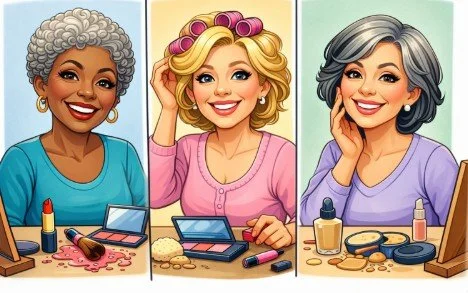
Makeup Tips for Mature Skin: Because We're Not Trying to Look 25
Makeup tips for Mature skin
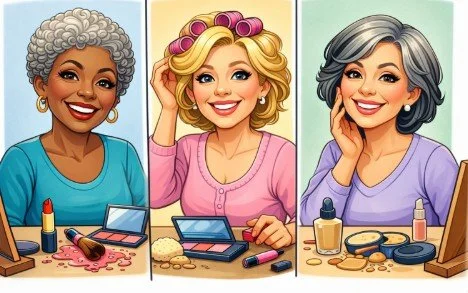
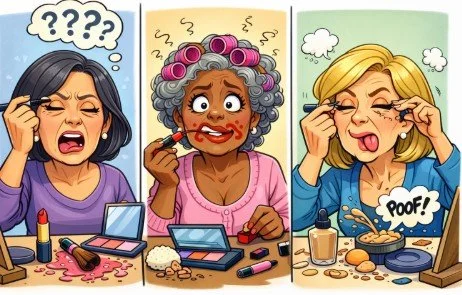
There’s a special kind of bravery that comes with putting on makeup after 50. Your eyes water for no reason, your hands don’t quite listen anymore, and suddenly eyeliner feels like an extreme sport. Some days end with mascara on your cheekbones and foundation settling into places you didn’t know existed. And then there are the good days—the ones where you finish, step back, and think, Well hello… there I am. This is the reality of makeup in midlife: a little chaos, a lot of humor, and moments of confidence that feel hard-won and well deserved.
A brutally honest guide from someone who peaked at mascara application in 1987
Look, I'm going to level with you right from the jump: I have absolutely no business writing a makeup guide. None. Zero. I am the human equivalent of a "Pinterest Fail" meme when it comes to cosmetics.
But here's the thing—I'm pretty sure there are thousands of us out here, wandering through Sephora like confused tourists in a foreign country, pretending we understand what "setting spray" is and nodding knowingly when the 19-year-old sales associate mentions "baking." (Spoiler alert: she's not talking about cookies, and I'm still disappointed about it.)
Full disclosure: My makeup skills peaked somewhere around 1987 when I mastered the art of applying Maybelline Great Lash mascara without poking myself in the eye. It's been downhill ever since.
The Problem With Modern Makeup (Or: Why Is Everything So Complicated Now?)
Remember when makeup was simple? You had foundation (one shade: "sort of beige"), lipstick (red or pink), and if you were feeling fancy, some blue eyeshadow. Done. You looked like every other woman in America, and that was fine.
Now? NOW we have primers and color correctors and highlighters and bronzers and contour kits and "strobing" and about 47 other things I can't even pronounce. When did makeup application become a full-time job requiring a degree in fine arts?
And can we talk about how our skin has completely betrayed us? You try to apply a little eyeshadow and your eyelid is like "lol, remember when I used to be smooth and stay in one place? Yeah, those days are OVER, sister." Everything slides, creases, settles into lines you didn't even know existed. It's like your face is actively working against you.
Contour: A Mystery Wrapped in an Enigma, Smeared on Your Face
Okay, seriously, what the hell is contour? I've watched approximately 4,000 YouTube videos, and I still don't get it. Apparently, you're supposed to paint dark stripes on your face to create "shadows" and then paint light stripes to create "highlights," and somehow this is supposed to give you cheekbones like a supermodel.
You know what actually happens when we try this? We look like we got in a fight with a mud puddle and forgot to wash half our face. The 23-year-old beauty influencers make it look so easy. "Just blend!" they chirp, waving their makeup brushes like magic wands.
Bruh. BRUH. My skin doesn't blend. It absorbs makeup unevenly, settles into every crevice, and then slides off my face by 2 PM like it's trying to escape.
Hot take: Maybe—and hear me out here—maybe we don't NEED contour. Maybe our faces are perfectly fine the way they are. Maybe the only people who need contour are runway models and people in witness protection trying to change their appearance
The Color Conundrum (Or: Everything Looks the Same Until You Get Home)
Can we discuss the absolute nightmare that is choosing makeup colors? There are approximately 847 shades of "nude" lipstick, and I swear on everything holy, they ALL look identical in the tube. Then you get home, apply it, and you've somehow purchased either "corpse chic" or "I ate a highlighter and it's not sitting well with me."
And don't even get me started on foundation matching. "What's your undertone?" the sales lady asks. I don't know, Carol, I didn't realize my skin had TONES. I thought it just had... color? Apparently, I'm supposed to know if I'm "warm," "cool," or "neutral." I'm usually just "tired."
My Completely Unqualified Color Advice (Take at Your Own Risk):
Eyeshadow: Is blue eyeshadow back? Is it still out? Does anyone actually know? I've decided to stick with browns and taupes because they're basically impossible to screw up catastrophically. They just make you look slightly sleepy, which at our age is pretty much baseline anyway.
Lipstick: Here's my foolproof test: If you look in the mirror and your first thought is "that's... a choice," it's too bright. If you think "did someone die?" it's too dark. Aim for somewhere between "I'm wearing lipstick" and "am I wearing lipstick?" That's the sweet spot.
Blush (yes, we're calling it blush now, not rouge): Apply it. Look in the mirror. Remove half of it. Look again. Remove half of what's left. NOW you're getting close. Trust me on this—what looks "barely there" in your bathroom mirror will photograph as "possibly a clown" in natural light.
I once bought a foundation described as "radiant beige." Turned out "radiant" was code for "orange." I looked like I'd been using Trump's personal makeup artist. My husband asked if I was feeling okay. I was not.
Skincare: The Thing I Should've Started Caring About in 1995
Everyone's obsessed with skincare routines now. Ten-step Korean skincare! Retinol! Vitamin C serums! Hyaluronic acid! Peptides! It's like someone raided a chemistry lab and decided to market it to middle-aged women as "self-care."
My skincare routine for the first 40 years of my life was basically some sort of cleaners. Code for “Whatever is on sale”. Give me some sort of props for at least moisturizing daily. Woohoo!!!
Now I'm supposed to have a morning routine and an evening routine and something called "actives" that I'm meant to layer in a specific order determined by... molecular weight? I don't know, I wasn't paying attention during chemistry class. I was too busy perfecting my blue eyeshadow application.
The truth: You know what would've helped my skin? Sunscreen. Every day. Starting in 1982. But did I do that? Of course not. I was too busy slathering myself in baby oil and lying in the sun like a rotisserie chicken. Past me was an idiot.
The Great Eyelid Rebellion of Our 50s
Let's address the elephant in the room, shall we? Our eyelids have officially declared independence from our face. They don't stay where we put them. They fold in unexpected directions. They crease in new and creative ways every single day.
Trying to apply eyeliner is like trying to draw a straight line on a water bed. During an earthquake. While someone's yelling at you about your car's extended warranty.
And eyeshadow? Forget about it. You carefully apply a nice neutral shade, look down for THREE SECONDS, look back up, and it's migrated into every single crease you have. You've gone from "subtle and sophisticated" to "did she fall asleep in her makeup from 1985?" in the time it takes to blink.
Things that actually help (discovered through extensive trial, error, and low-key crying in my bathroom):
• Primer: I don't understand what it does, but it does SOMETHING. It's like giving your makeup a fighting chance before it inevitably slides off your face anyway.
• Cream products: Powder is the enemy. It settles into every line on your face like it's trying to highlight your entire life story. Cream products at least have the decency to betray you more subtly.
• A light hand: Whatever you think looks good, use half that amount. Then use half again. You're welcome.
YouTube Tutorials: A Journey Into Despair
I've watched so many makeup tutorials. SO MANY. Each one hosted by a gorgeous 22-year-old with perfect skin, perfect lighting, and the steady hands of a neurosurgeon.
"This is super easy!" they say, as they effortlessly create a flawless cat eye in 2.3 seconds. "Anyone can do this!"
No. No, we cannot. Their skin is still cooperating with them. Their eyelids haven't yet learned about gravity. They can actually SEE their entire eyelid when they close their eyes. They're living in a completely different reality.
Also, why do they all do their makeup in a ring light bright enough to guide aircraft? Of course everything looks good in lighting that intense. I could probably contour with mud in that lighting and still look decent.
Once watched a tutorial on "how to make your eyes look bigger." Spoiler alert: the only way to make my eyes look bigger at this point is photoshop or surgery. The makeup tips were lies. All lies.
What I've Actually Figured Out (Barely)
After approximately 35 years of mediocre to terrible makeup application, here's what I've learned:
1. Lighting is everything, and it's all lying to you. Your bathroom mirror is a liar. That Target dressing room mirror? Also a liar. The only truth is natural sunlight, and even then, it's probably being passive-aggressive.
2. Moisturizer > Everything else. Seriously. You could skip every other step and just moisturize, and you'd probably look better than if you spent 45 minutes applying 17 different products to dry, angry skin.
3. Less is actually more. I know, I KNOW, every tutorial says this and I ignored it for years. Turns out they were right. Shocking.
4. Your eyebrows are more important than you think. They frame your entire face. Mine have been gradually disappearing since 2010 thanks to waxing according to the girl now threading my eyebrows. Some days they're sisters. Most days they're distant cousins who don't talk at family gatherings.
5. Mascara is still magical. Even when everything else goes wrong (and it will), mascara can make you look like you got at least four hours of sleep. Which is basically the best we can hope for at this point.
Oh, I did try false eyelashes. Briefly.
Nothing quite humbles you like someone squinting at your face and asking, “Uh… what’s on your eye?”
Apparently, false lashes are not a “set it and forget it” situation. They migrate. Quietly. Especially when you rub your eyes. By the end of the day, I looked less glam and more confused craft project.
What We Actually Need (And I'm Talking to the Beauty Industry Here)
Forget products for "mature skin" that are just overpriced versions of regular products in fancier packaging. Here's what we ACTUALLY need:
• Foundation that doesn't settle into every line like it's trying to map out our entire life journey
• Eyeliner that accounts for the fact that our eyelids are no longer smooth surfaces
• Lipstick that doesn't bleed into the fine lines around our mouth (you know, the ones that mysteriously appeared overnight)
• Eyeshadow that STAYS PUT for more than 12 minutes
• A color-matching system that doesn't require a degree in color theory
• Tutorials from people who also have no idea what they're doing but are willing to try anyway
Real talk: Some days you'll get it right. Most days you'll look like you applied your makeup in a moving vehicle during a tornado. Both are perfectly acceptable outcomes.
My Current "Routine" (Heavy Air Quotes)
On days when I actually wear makeup (which, let's be honest, is becoming less frequent because WHO HAS THE TIME):
Morning: Moisturizer with SPF. This is non-negotiable. Past me didn't use sunscreen, and present me is VERY ANGRY about that decision.
If I'm leaving the house and want to pretend I have my life together:
• Tinted moisturizer (because "foundation" sounds like too much commitment)
• Concealer under my eyes (because the bags are now permanent residents)
• Blush (applied, then immediately regretted and half-removed)
• Eyebrow pencil (today we're attempting "sisters," but we'll probably land on "vague acquaintances")
• Mascara (the one thing I can do without a tutorial)
• Lipstick in some shade of "is this color or is this just fancy chapstick?"
Total time: 10 minutes. Results: somewhere between "she tried" and "is she okay?"
The Truth Nobody Wants to Hear
Here it is, the big secret: nobody actually knows what they're doing. Those beauty influencers? They're good at makeup, sure, but they're working with 25-year-old faces. That's easy mode. We're playing on expert level with equipment that's actively working against us.
And you know what else? Most people aren't looking at you that closely anyway. They're too busy worrying about their own disappearing eyebrows and whether they remembered to blend their own makeup.
So yeah, I still don't know what contour is. I can't tell you which serum goes on first. I don't understand why there are 47 different types of mascara when they all basically do the same thing.
But I'm showing up. With or without makeup. With or without any clue what I'm doing. And honestly? That's enough.
"The goal isn't perfection. The goal isn't to look 25. The goal is to look in the mirror and think 'yeah, okay, I can work with this' and then get on with your day."
In Conclusion (Because Even My Rambling Must End Eventually)
Am I qualified to give makeup advice? Absolutely not. Do I understand contouring? Still no. Have I figured out my undertones? Not even a little bit.
But I've made peace with being bad at this. I've accepted that my makeup skills peaked in the late 80s and it's been a slow decline ever since. I've embraced the fact that "good enough" is actually good enough.
And if you're like me—still confused by modern makeup, still not sure if rouge is called blush now, still Googling "how to apply eyeshadow" like you're going to magically understand it this time—you're not alone.
We're out here. We're trying. We're failing. We're showing up anyway.
And honestly? That's the most beautiful thing of all.
(That was too sincere. Let me end on brand: My face and I have reached an understanding—I'll stop trying to dramatically transform it with techniques I don't understand, and it'll stop moving around so much when I'm trying to put on mascara. We're still negotiating the eyebrow situation.)
P.S. If anyone ever figures out contour and can explain it to me using only words of one syllable and possibly interpretive dance, I'm all ears.
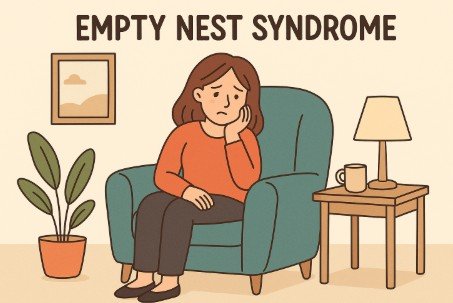
Empty Nest Syndrome
Empty Nest Syndrome: When the House Gets Quiet (Too Quiet)
No one really prepares you for the moment when the house goes from loud, chaotic, and full of life… to eerily quiet. One minute you’re stepping over shoes, reminding someone (again) to unload the dishwasher, and negotiating curfews. The next? You’re standing in the kitchen wondering why it’s so clean — and why that feels strangely unsettling.
Empty nest syndrome isn’t just missing your kids; it’s adjusting to a new version of yourself. Your role shifts overnight, and suddenly you’re left asking, “So… now what?” You’re proud, sad, relieved, nostalgic, and lonely — sometimes all before lunch. And yes, it’s completely normal to feel all of it at once.
The good news? This quieter chapter isn’t the end of your story — it’s a plot twist. One that gives you space to reconnect, rediscover, and maybe even enjoy not sharing the bathroom. Eventually, the silence gets less heavy… and starts to feel like possibility.

So Your Kids Left Home. Now What?
A brutally honest guide to Empty Nest Syndrome (spoiler: you’ll survive… probably with snacks and sarcasm)
Okay friend, listen. Nobody warned us about this part. Everyone preps you for sleepless newborn nights, the terrible twos, and the full-blown psychological thriller that is puberty. But Empty Nest Syndrome? Nope. That little plot twist just sneaks up like a cat knocking something off the counter while making eye contact.
One minute you’re whining about Mount Laundry and a grocery bill that rivals the GDP of a small nation. The next? Silence. Glorious. Unsettling. “Why is it so quiet and why do I suddenly feel weird about it?” silence.
Honestly, for a long time it didn’t even feel like my kids had moved out. It was more like a very long, very confusing game of musical chairs.
My stepdaughter had been living with her partner, so technically she was gone… until life happened. The relationship ended, the job disappeared, and boom—she was back home. Surprise!
My oldest stayed home for her first year of university thanks to lovely little COVID, then went away to school for four years.
My youngest went away for school too, quit her program, worked her summer job, and stayed with her boyfriend’s parents. Then she went back to school and moved into a student apartment.
So really… had anyone actually moved out? Or were they just aggressively rotating locations?
Then my daughter finished school and moved in with her boyfriend. And that—that was the moment. The “oh crap” moment. The realization that this wasn’t temporary. My kids weren’t just visiting adulthood; they were unpacking there.
That’s when it hit me: my kids are growing up. They’re building lives, making choices, and moving forward. And while I’m incredibly proud… I’m also standing in a quiet house wondering who drank all the milk when nobody’s even home.
So yes, the nest is emptier. But here’s the thing no one tells you: you’re still here. You survived diapers, drama, and Door-Slamming Teenage Years. You can survive this too.
And hey—at least now the snacks you buy actually last longer than 24 hours. 💁♀️
The Five Stages of Empty Nest Grief (That Nobody Talks About)
Stage 1: Denial
“This is AMAZING! I can finally watch my shows without someone yelling ‘What’s for dinner?’ every five minutes!”
You deep-clean their room like you’re auditioning for a home makeover show. You reorganize the pantry. You alphabetize spices. You convince yourself this—this right here—is the freedom you’ve been waiting for.
Except… not really.
Like I mentioned earlier, it honestly didn’t even feel like my kids had moved out. It was more of a “they’re kind of gone but also kind of not” situation. My stepdaughter is still with us, so technically we’re not empty nesters at all. We’re more like empty-nest-curious.
We’re standing on the edge of it, peeking over, saying, “Oh wow, that looks nice,” while also whispering, “But please don’t move too far away.” Because yes, we’re looking forward to being empty nesters… eventually. The quiet sounds lovely. The freedom is tempting.
But do we still want our kids close? Around? Dropping by? Eating our food? Absolutely. Well—at least I do. Let’s be honest, I want the best of both worlds: independence and random visits where they magically appear when the fridge is full.
Denial, after all, isn’t just pretending they’re gone. It’s pretending you’re totally ready for it when you’re very much not. And that’s okay. 💕
Stage 2: Bargaining
This is where the texting starts. And by starts, I mean escalates rapidly.
“Just checking in!”
“How’s the weather there?”
“Did you eat today?”
You are basically one emotionally charged decision away from tracking their location like they’re still 16 and you’re totally normal about it.
Real talk: if you’ve texted your kid three times before noon to confirm they’ve had breakfast, congratulations—you are deep in the bargaining stage. It’s fine. This is a judgment-free zone. We’ve all been there.
Sometimes they text me back right away, which gives me false hope and dopamine. Other times… it takes a few days. DAYS. I try to stay calm, but let’s be honest—I’m mentally drafting my will by hour 36.
Now, I will admit: I still pay for the cell phones of the two youngest. And yes, I absolutely consider that leverage. Am I proud? No. Will I use it? Also no. But do I know it exists? Absolutely.
In six months, though, that safety net disappears. My oldest will be responsible for her own phone bill. Her own bills. I honestly don’t know what I’ll have to hold over her head to return my calls. Emotional guilt? Home-cooked meals? “Accidentally” etransfer-ing her money and reminding her I exist?
That step—when she takes over her phone and car insurance—that’s really the beginning of full-blown adulthood. Sure, some of my bills will be lower (and I am looking forward to that, let’s be clear). But emotionally? That’s the moment where bargaining officially stops working.
So here I am, enjoying slightly fewer bills, slightly more silence, and realizing I’m running out of things to negotiate with.
Anyway… onward to Stage 3. 😅
Stage 3: The Identity Crisis
And now we arrive at the big, slightly uncomfortable question:
Who are you when you’re no longer parenting someone 24/7?
For years, “Mom” or “Dad” wasn’t just a title—it was your entire personality. You didn’t have hobbies, you had schedules. You didn’t have interests, you had carpools. Now suddenly the lunches are unpacked, the permission slips are gone, and you’re standing there thinking… Wait. Is there still a person under all this?
Apparently, yes. But she’s a little rusty and hasn’t been asked what she wants in years.
Also, side note: my kids didn’t even call us the same thing over the years. After “Mommy,” my oldest decided to upgrade me to Mother.
MOTHER.
I don’t know what image that word brings up for you, but for me it was cold hallways, distant parents, and children being shipped off to boarding school while their parents politely forgot their names. I hated it. My daughter, however, thought it sounded very grown-up and sophisticated. Meanwhile, I was internally screaming, “I AM STILL WARM AND AFFECTIONATE, THANK YOU.”
Thankfully, I’ve now been downgraded—sorry, upgraded—to Mum. Sweet, familiar, comforting. Huge relief. My identity is no longer “emotionally distant Victorian parent.” Progress.
My youngest, meanwhile, went through a phase of learning German in her teens, which resulted in some… creative naming. Her dad is still “Vader” (yes, like Darth Vader, and honestly that tracks. He is a huge Star Wars fan). But at least I stayed Mom. I survived the linguistic experiment.
I know I’ll always be Mum or Mom—and I’m grateful for that. But I won’t lie… I loved being Mommy. That version of me felt soft, needed, and very much at the center of their world.
So yeah. Stage 3 is realizing you’re still you, just without the constant chaos. And maybe—just maybe—learning how to hold onto who you were, while figuring out who you’re becoming next. 💕

What Nobody Tells You (But I Will)
The hardest part isn't missing them—it's missing who *you* were when they needed you. Parenthood gave you purpose on a silver platter. Now? You've got to figure out your purpose yourself. How utterly inconvenient.
"I spent 18 years making sure someone else was okay. Now I have to figure out if I'm okay? This wasn't in the parenting manual."
But here's the thing they don't show in the Hallmark movies: this is actually your chance to become interesting again. Remember hobbies? Remember having thoughts that didn't revolve around school schedules and what's for dinner?
The Ridiculous Things You'll Do
You'll keep making too much pasta. You'll set the table for four instead of two. You'll hear a noise at 11 PM and think "they're home!" before remembering they live 500 miles away now.
You'll also do weirder things, like:
• Walking past their empty room and feeling like you're in a museum
• Getting unreasonably emotional at Walmart (or browsing Amazon) in the back-to-school section
• Considering getting a dog, a cat, or possibly a llama to fill the void
• Stalking their social media like you're training for the FBI
Pro tip: The dog will love you unconditionally and never roll their eyes at your jokes. Just saying.
The Plot Twist
Eventually—and I promise this happens—you'll realize something strange. You kind of... like this? The quiet. The spontaneity. The ability to eat cereal for dinner without judgment. The relationship you have with your partner (or yourself, or your friends) without the constant background noise of parenting.
Your kids will call. They'll ask for advice. They'll need you in different ways. And you'll be there, because that part never changes.
But you'll also be living your own life. Finally. Again. Whatever.
So What Now?
Give yourself permission to feel weird about this. Give yourself permission to miss them and also enjoy sleeping past 7 AM. Give yourself permission to be more than just someone's parent.
Because here's the truth: you did your job. You raised a human capable of leaving. That was literally the entire point. Congratulations, you succeeded. Now the next chapter is about figuring out what success looks like for you.
No pressure or anything.
And if all else fails, there's always wine and group therapy. Preferably in that order.